Selecting the optimal tubing material is a critical decision for engineering reliability, long-term durability, and operational safety. In modern pneumatic, automotive, and industrial fluid systems, Polyurethane (PU) and Polyamide 12 (PA12) stand out as the two dominant polymer choices.
While a PU and a PA12 hose might look identical on the surface, their chemical compositions, mechanical thresholds, and environmental resistances are entirely different. This comprehensive technical guide breaks down the physical properties, industry standards, and practical application differences between these two high-performance materials.
Understanding the Materials: What Is PA12 vs. PU?
What Is PA12 (Polyamide 12)?
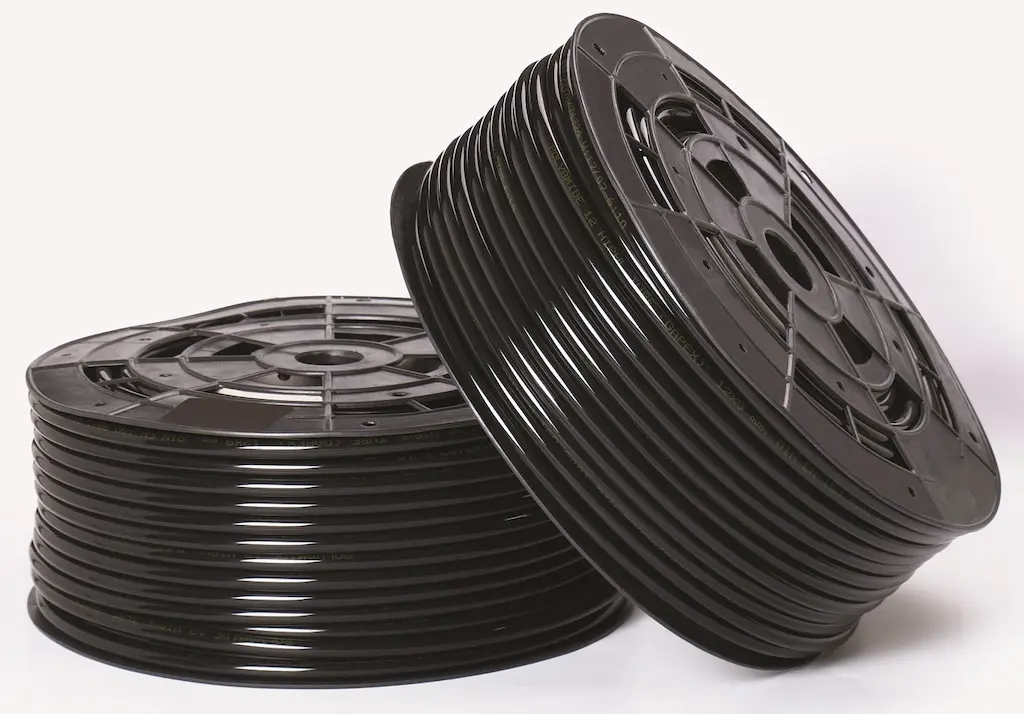
PA12, often referred to as Nylon 12, is a semi-crystalline engineering thermoplastic engineered for high-stress applications. It is universally recognized for its exceptional mechanical strength, superior dimensional stability, and robust resistance to chemicals and environmental aging. Unlike lower-grade nylons, PA12 exhibits extremely low moisture absorption, ensuring it retains its structural integrity and burst pressure capacity even in humid or wet environments.
What Is PU (Polyurethane)?
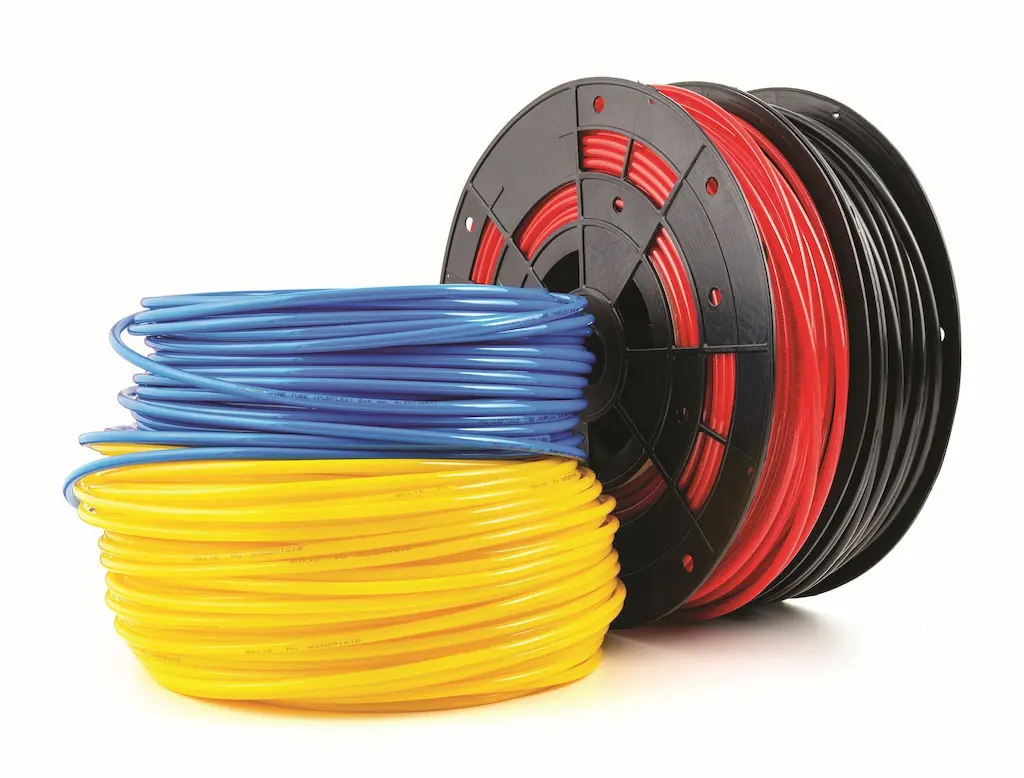
PU is a highly versatile, elastomeric polymer that bridges the gap between flexible rubber and rigid plastics. The defining characteristics of PU hoses are their extreme flexibility, kink resistance, and unparalleled abrasion resistance. It is the premier choice for systems involving continuous motion, tight bending radiuses, and mechanical wear.
Technical Comparison: PU vs. PA12 Key Differences
| Technical Dimension | PA12 (Polyamide 12) Tubing | PU (Polyurethane) Tubing |
|---|---|---|
| Chemical Composition | Semi-crystalline linear engineering thermoplastic. | Block copolymer elastomer (Polyether or Polyester base). |
| Material Hardness | Shore D 62 to Shore D 70 (Rigid / Semi-rigid profile). | Shore A 95 to Shore A 98 (Highly flexible / Rubber-like). |
| Temperature Spectrum | -40°C to +100°C (Maintains structural pressure at peak heat). | -20°C to +60°C (Pressure thresholds derate rapidly above 50°C). |
| Max Pressure (at 23°C) | Up to 30 Bar Working / 90 Bar Burst (Size & wall dependent). | Up to 10 Bar Working / 30 Bar Burst (Standard automation baseline). |
| Kink Resistance | Moderate. Structured routing; permanently creases if overloaded. | Outstanding. Superior shape-memory with 100% flex recovery. |
| Abrasion Resistance | Good industrial resistance (~15–20 mg loss via Taber Abrasion). | Exceptional (<5 mg loss via Taber Abrasion; 4x tougher than PA12). |
| Hydrolysis Stability | High dimensional stability. Minimal water absorption (<1.4%). | Polyether: Excellent moisture stability / Polyester: Prone to degradation. |
| Chemical Compatibility | Highly resistant to hydraulic oils, fuels, grease, and solvents. | Good against oils/lubricants; vulnerable to strong acids/ketones. |
| Fitting Tolerance | Ultra-tight tolerances; optimized for standard push-in fittings. | Strict Outer Diameter (OD) calibration, but more compliant under stress. |
| Regulatory Standards | DIN 73378, DIN 74324, ISO 7628, SAE J844 (Air Brake Systems). | ISO 14743 (Pneumatics), FDA 21 CFR / NSF (Food & Medical grades). |
| Ideal Application | Automotive air brakes, high-pressure pipelines, heavy machinery. | Robotics, dynamic drag chains, moving automation, coiled hoses. |
4 Practical Ways to Physically Differentiate PU and PA12 Hoses
If you are in the field or a warehouse without technical documentation, you can use these four physical tests to distinguish between an unmarked PU and PA12 tube:
1. The Rigidity and Tactile Feel Test
- PA12: Feels distinctly harder, smoother, and acts like a classic “engineering plastic.” It resists surface indentation when pressed with a fingernail.
- PU: Has a softer, slightly grippy, and rubbery tactile feel. It feels significantly more elastic and compliant in hand.
2. Bending and Kink Behavior
- PA12: Requires noticeable force to bend. If bent past its structural limit, it will crease or kink permanently, holding a deformed shape due to its high dimensional stability.
- PU: Bends effortlessly into tight radiuses without kinking. Because of its excellent shape-memory properties, it snaps back to its original straight profile immediately after release.
3. Structural Routing and Shape Memory
- PA12: Holds its formed shape exceptionally well. This makes it ideal for clean, straight, aesthetic, and permanent routing along machinery frames or chassis.
- PU: Is naturally floppy and sags under its own weight, making it perfect for dynamic tracking inside drag chains or robot arms.
4. Verified Line Markings (The Most Reliable Method)
While visual clarity and colors can look identical, industrial-grade hoses feature surface ink-jet prints. Look for explicit material callouts (“PA12” or “PU”), standard compliance marks like DIN 73378 (common on PA12 air brake lines), outer/inner diameter dimensions, and manufacturer branding.
Why Choose PA12? (The Heavy-Duty Standard)
PA12 is the definitive choice when your application demands structural rigidity, elevated pressures, and intense environmental exposure. It is highly recommended for:
- Automotive Air Brake Systems: Fully compliant with global automotive transport safety margins.
- High-Pressure Fluid Transfer: Ideal for systems like high-pressure misting or chemical delivery.
- Harsh Chemical Environments: Resistant to petroleum products, salt solutions, and industrial solvents.
- Fixed Pneumatic Pipelines: Where lines must remain perfectly straight and anchored without expanding under continuous pressure.
Why Choose PU? (The Flex and Motion Specialist)
PU is the undisputed king of applications involving rapid, repetitive movement and tight space constraints. It is highly recommended for:
- Robotics and Articulated Arms: Withstands millions of flex cycles without material fatigue.
- Pneumatic Tooling & Coiled Hoses: Perfect for overhead workstation air lines that stretch and retract.
- High-Wear Automation Lines: Where hoses are constantly dragged across metal surfaces, concrete floors, or moving machine components.
- Complex Enclosures: Where the tubing must navigate tight, winding paths inside compact control boxes.
Global Manufacturing Excellence: PA12 and PU Solutions from RTC Group
Choosing the right polymer formulation, wall thickness, and diameter tolerances is essential for guaranteeing system safety and maximizing service life. At RTC Group, we bring over six decades of advanced polymer extrusion expertise directly to your supply chain.
Operating from our certified state-of-the-art facility, we specialize in high-precision, factory-direct manufacturing of both PA12 and PU tubing tailored for global OEMs, industrial distributors, and heavy-duty aftermarket suppliers.
Why Partner with RTC Group?
- Automotive-Grade Quality: Our production processes are strictly certified under ISO 9001 and IATF 16949 quality management standards.
- Standard Compliance: Our air brake lines are engineered and fully compliant with strict international standards, including DIN 73378.
- OEM & Private Label Capabilities: We offer complete custom branding, custom ink-jet text printing, product codes, and tailored packaging solutions with zero additional service fees.
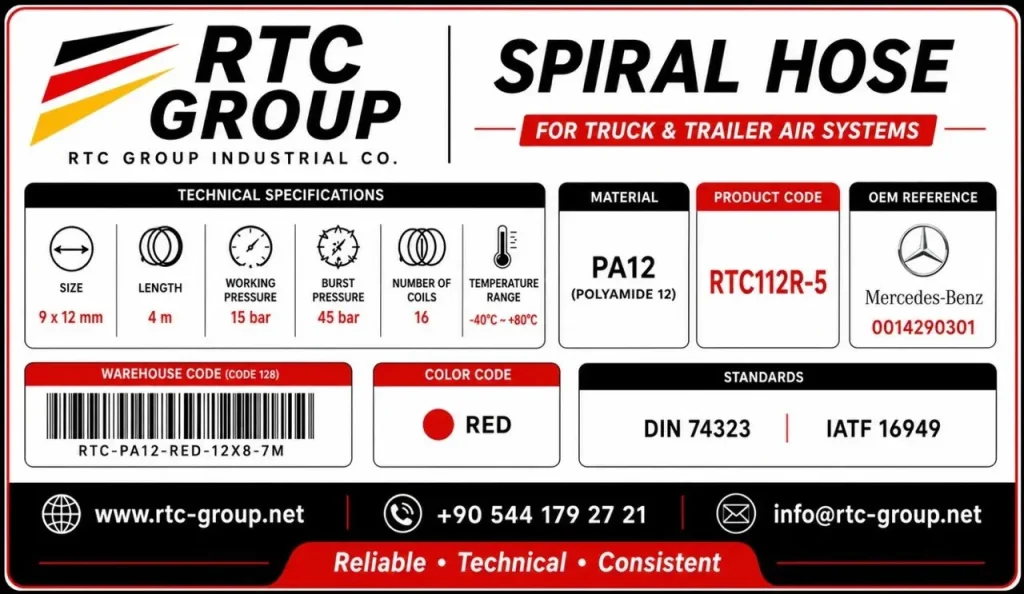
- High-Pressure Performance: Our signature Spiral PA12 Air Brake Tubes deliver up to an 80 Bar burst pressure threshold (at 23°C) along with superior UV and hydrolysis stabilization.
Whether you need high-volume container shipments of standard pneumatic tubes or a custom-engineered OEM solution, RTC Group delivers premium factory-direct wholesale pricing and fast global logistics to over 40 countries.
Optimize your fluid and pneumatic systems today.
Visit www.rtc-group.net to download official technical datasheets, explore our product catalog, or request free engineering samples.